

Winter Maintenance
With Winter upon us, it’s time to check your antifreeze - if you haven’t already done so. Apart from the obvious reason, it also provides corrosion protection.
The best way to start is by testing the strength of the coolant in your system. A tester is a basic item that is worth having. We can supply a reputable one made by Sealey.

Corrosion protection is easily checked; if the coolant has lost its colour, which is usually blue or green, then the protective element has expired. This is also important, David Browns aren’t prone to cylinder wall porosity, but corrosion can cause other problems. Water pump seals may adhere to the cast-iron sealing surface on the pump body, which can result in seal damage upon engine start-up after an extended period of inactivity. This problem can also occur if the cooling system is drained and left dry over winter. Rust particles can also block the radiator.
If the strength and colour are acceptable, then while you are looking at the cooling system, check the hoses, fan belt and cleanliness of the radiator matrix. If the only issue appears to be that the coolant strength is slightly low, then simply drain some of it from the radiator or engine and replace it with fresh antifreeze.
If you decide to replace the coolant, then check the points above anyway; your new, stronger coolant will be more likely to seek ways to escape from defective hoses. That said, you may wish to add a sealant, such as K-Seal, with the new coolant. We always recommend using this on early David Brown engines with wet cylinder liners, as they are prone to leaking coolant into the sump, but that’s another story! With the system drained, you may like to check the thermostat; remove it and immerse it in boiling water to check that it opens and closes fully. If the old coolant is particularly dirty, it may be worth running the engine for a while with a cooling system cleaner in it. We can supply a 400ml bottle which treats systems up to 20 litres capacity.
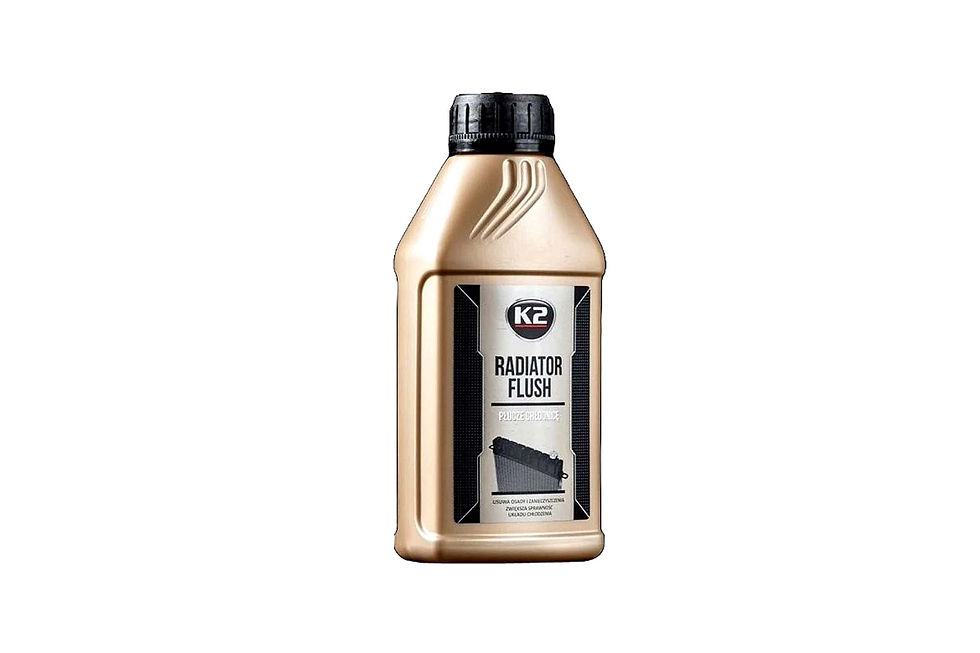
When you are confident that the system is leak-free and clean, add the recommended amount of antifreeze, then top up with clean water. Rainwater is best, particularly if your mains water is hard. Run the engine at a fast tick-over with the radiator cap off until the thermostat opens. You will see the water gushing in from the top hose when this happens. Covering the radiator grille with something like a bin bag will help the engine warm up quicker. Keep an eye on the coolant level; it may need topping up.
Although many modern engines need an expensive formulation, traditional Ethylene Glycol is most appropriate for David Brown engines. A ratio of 25% of this to 75% water used to be the general recommendation in the U.K. Nowadays, 30% is more usual; this will protect down to -15 degrees C. If you expect to use the tractor during very cold weather, the wind chill factor from the cooling fan, before the radiator has warmed up, will reduce the air temperature further.
Below is a list of the approximate cooling capacities of the most common David Brown tractors.
Model(s) | Capacity |
VAK1, VAK1A & Cropmaster | 27 Litres |
25 & 30C | 20 Litres |
25D, 30D, 900, 850, 950 & 4 cylinder 880 | 16 Litres |
990 Implematic & 990 Selectamatic with 4/47 engine | 15 Litres |
770, 780, 885, 1190 & 1194 | 9 Litres |
880 3 cylinder (Implematic & Selectamatic) | 10 Litres |
990 Selectamatic with 4/49 engine, 1200, 995 & 996 | 13.5 Litres |
1210, 1212, 1410, 1412,1290, 1390, 1490, 1690, 1690 Turbo, 1294, 1394, 1494, 1594 & 1694 | 15 Litres |


Comments